Translation quality and accuracy are no longer “nice to have” when it comes to global business: they’re operational requirements. In regulated industries, customer-facing communication and brand-critical content, a single mistranslation can cause reputational damage, legal exposure, or lost revenue.
However, many organizations still struggle to define what “good translation” actually means and which criteria should be used to assess it. Is it speed? Fluency? Terminology consistency? Or something more nuanced?
The short answer: translation quality is multi-dimensional, and accuracy is only the starting point.
What Translation Quality Really Means in a B2B Context
Translation quality refers to how well a translated text fulfills its intended purpose for its target audience. That purpose may be legal compliance, technical clarity, persuasive marketing, or user comprehension.
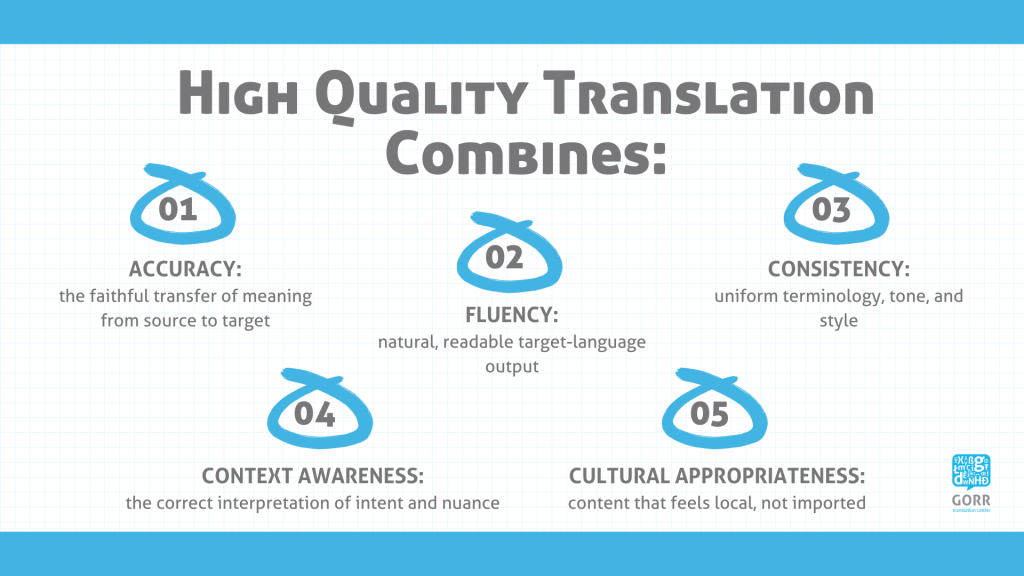
High-quality translation combines several measurable elements:
- Accuracy: the faithful transfer of meaning from source to target
- Fluency: natural, readable target-language output
- Consistency: uniform terminology, tone, and style
- Context awareness: the correct interpretation of intent and nuance
- Cultural appropriateness: content that feels local, not imported
A translation can be grammatically correct and still fail if it ignores context, misuses terminology, or clashes with cultural norms and expectations.
Accuracy Is Necessary but Not Sufficient
Accuracy is often misunderstood as the word-for-word correctness of content. However, in reality, it is the preservation of meaning, intent, and factual integrity, rather than copying sentence structures.
True accuracy depends on:
- Subject-matter expertise to avoid domain-specific errors
- Terminology management to ensure approved terms are used consistently
- Context awareness to prevent literal but misleading or obscure translations
Unfortunately, this is where automated tools often fall short. AI systems excel at pattern recognition, but they lack real-world understanding of business intent, regulatory nuance, and audience expectations.
Only a human translator with years of hands-on experience can consistently achieve this level of accuracy.
Fluency and the End-User Experience
Fluency determines whether your content feels professional or mechanical. For end users, fluency directly affects trust.
A fluent translation:
- Reads as if written by a native speaker
- Uses idiomatic expressions appropriately
- Matches the tone and register of the original content
Poor fluency doesn’t just sound awkward. It signals low credibility or deceit, especially in B2B environments where precision and professionalism matter.
Consistency Is a Brand Asset
Consistency is one of the most overlooked indicators of translation quality.
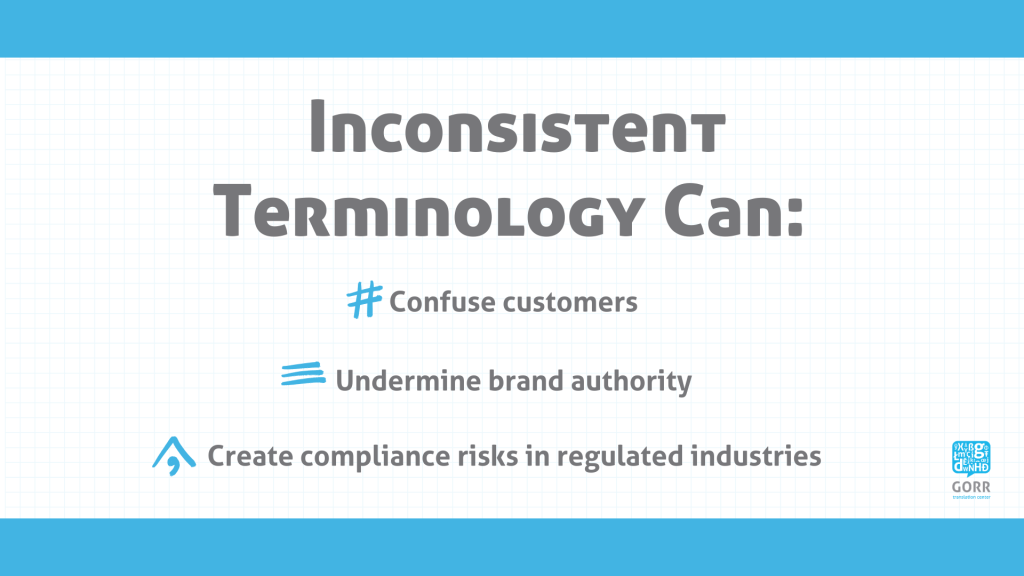
Inconsistent terminology can:
- Undermine brand authority
- Create compliance risks in regulated industries
Professional language service providers rely on translation memory, pre-determined termbases, and style guides to maintain consistency across projects, languages, and time. This institutional memory becomes more valuable the longer a partnership lasts, as it is progressively built upon and improved.
Quality Assurance Is a System, Not Just a Spellcheck
High-quality translation is never the result of a single pass with Grammarly.
A professional quality assurance workflow typically includes:
- Human translation or full post-editing
- Revision by a second linguist
- Independent QA checks for terminology, formatting, and consistency
This layered process reduces risk, catches edge cases, and ensures the final content is fit for publication.
While automated QA tools certainly help, they do not replace human judgment. They support it.
The Role of Technology Without the Illusion
CAT tools, translation memory, and controlled post-editing improve the efficiency and consistency of a final translation. But they are infrastructure, not decision-makers.
Technology supports quality when:
- Linguists understand how to use it correctly
- Post-editing levels are clearly defined
- Human reviewers remain accountable for the final output
When technology is treated as a shortcut rather than a tool, quality suffers.
Localization Quality Goes Beyond Language
Accuracy without localization can still fail in any market.
Localization quality ensures that:
- Cultural references make sense
- Tone aligns with local expectations
- Messaging resonates with the target audience
This is especially critical for marketing, UX content, and customer communication, where emotional response matters as much as factual correctness.
Why Translation Quality Is a Strategic Decision
For B2B companies, translation quality directly affects:
Low-quality translation is rarely a one-time cost. It leads to numerous reworks, customer confusion (or even outrage), and may require long-term reputational repair.
High-quality translation, by contrast, compounds in value over time through consistency, trust, understanding, and reduced risk.
Accuracy Is the Floor, Not the Ceiling
Translation quality starts with accuracy, but it doesn’t end there.
True quality lives at the intersection of human expertise, structured processes, and intelligent technology. It is deliberate, measurable, and repeatable.
Seeing as we now live in a world where AI-generated content is everywhere, professional translation quality is one of the clearest signals that a brand takes its global audience seriously.
Accuracy opens the door—but quality translation is what keeps global audiences coming back.